


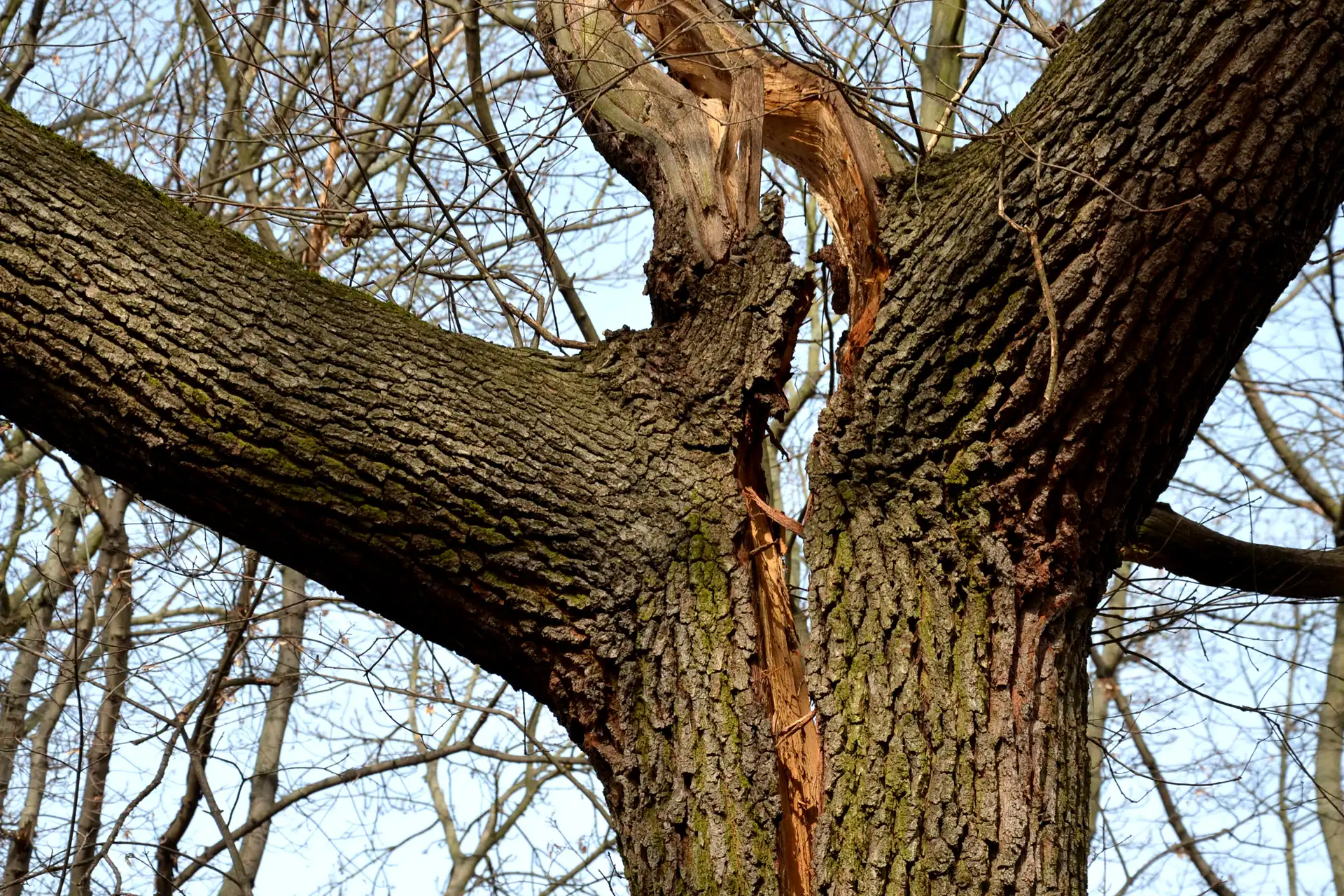
What Are Codominant Stems? Why Split Trunks Need an Arborist’s Attention
A mature shade tree can be an important part of a Bradenton, Florida, property, but certain growth patterns can make an otherwise healthy-looking tree more vulnerable to structural failure. Codominant stems are a common example. These competing trunks can develop weak connections that become especially concerning when exposed to thunderstorms, tropical weather, and strong winds.
What Are Codominant Stems?
Codominant stems occur when two or more stems of approximately the same diameter grow upward from the same location on a tree. Instead of developing one dominant central trunk with smaller branches, a codominant tree essentially develops multiple competing leaders. As the stems increase in size and weight, stress concentrates at the union. A heavy canopy or severe weather event may eventually cause the connection to separate.
Not every tree with multiple trunks is automatically dangerous. The concern is how those trunks are connected. Narrow, V-shaped unions can trap bark between the stems as they grow. This condition, known as included bark, can prevent a strong attachment from forming.
Why Codominant Trees Can Be a Concern in Bradenton
Bradenton's climate allows trees to experience substantial growth, but local weather can also place significant stress on their structures. Heavy summer rain, thunderstorms, tropical storms, and hurricanes can subject large canopies to powerful forces.
A codominant tree that has remained standing for years may still have a structural weakness. Wind can cause competing stems to move independently, increasing stress where they meet. Waterlogged soil and saturated ground can create additional concerns during Florida's rainy season. This makes structural assessments an important part of tree care.
Signs a Codominant Tree May Need Attention
Property owners do not need to diagnose structural defects themselves, but recognizing potential warning signs can help them know when to contact an arborist. Signs that warrant further evaluation may include:
- A narrow V-shaped connection between major stems
- Bark trapped inside the union
- Visible cracks where two trunks meet
- Separation that appears to be increasing
- One stem leaning away from another
- Recently broken limbs near a weak union
- Changes in the canopy following severe weather
A visible tree trunk split deserves prompt attention. Cracking can indicate that the forces placed on the union have already exceeded what the tree can reliably support.
Can a Split Tree Trunk Be Repaired?
There is no single split tree trunk repair method that is appropriate for every tree. The extent of the split, tree species, overall health, location, stem size, and likelihood of failure all affect the appropriate course of action.
An arborist can inspect the tree to determine whether it may be retained safely or whether removal should be considered. Attempting to pull a large split trunk together or install hardware without a proper assessment can create additional hazards. Structural tree work requires an understanding of tree biology, load distribution, and appropriate installation techniques.
How Cabling & Bracing Can Support Certain Trees
For some trees, cabling and bracing may help reduce movement and support weak unions. Cabling generally involves installing a flexible support system higher in the canopy, while bracing can involve rods installed through weak or split unions. These systems do not make a structurally compromised tree completely risk-free. They are intended to reduce stress and should be selected, installed, and monitored based on the individual tree.
Early intervention may also help prevent future problems. Strategic tree pruning can reduce excessive weight on competing stems and improve canopy structure. Young trees with codominant stems may particularly benefit from structural pruning that encourages stronger growth as the tree matures.
Schedule a Tree Assessment With Terry’s Tree Service
A split trunk or questionable stem union should not be ignored, especially with Bradenton's frequent storms and hurricane-season conditions. Terry’s Tree Service can help. We have Certified Arborists on staff and hold TCIA accreditation, with team members holding CTSP and TRAQ qualifications. Our company is also fully licensed and insured.
Our team can assess codominant stems, investigate a tree trunk split, and determine whether pruning, cabling and bracing, or another approach makes sense for the tree. Contact Terry’s Tree Service today to schedule an evaluation and get knowledgeable guidance for the trees on your Bradenton, FL, property.